Jan 27, 2019

Property tax ‘relief’ that exacerbates inequities

Oh, where does one begin with the folly of public officials seeking to use the legislative process to addto the inequities of the property tax system?
The Post-Gazette reports that a trio of Democrat legislators representing Pittsburgh will seek to amend a 1988 law applicable to Philadelphia (put in place there in 2013 but not allowing homeowners to also claim a homestead exemption) and Pittsburgh/Allegheny County (but never put into practice here) granting them the power “to manage” their property taxes.
Perhaps the more accurate phrase would be “to manipulate.”
Lack of a statewide mandate for regular reassessments — and Allegheny County officials’ steadfast refusal to do the same for political reasons — have left the system filled with gross inequities.
Not keeping up with ever-changing valuations, some properties are underassessed. Others are over-assessed. That means the former aren’t paying their fair share while the latter are paying an unfair share.
And what Sen. Jay Costa and Reps. Ed Gainey and Sara Innamorato seek to do will only exacerbate the inequities.
To wit, they want to create a “Longtime Owner Occupant Program (LOOP) that would, as the P-G reports, “exempt certain homeowners – those who, for example, have owned property for a minimum of 10 years in a rapidly developing neighborhood – from having to pay increased property taxes or allow them to defer the taxes to the next owner.”
Or as Costa told the newspaper:
“This is an attempt to allow those folks to stay in those neighborhoods, those folks who have spent many, many years, in good times and in bad. We don’t want them to be forced out of their homes because of the positive economic development that’s been taking place.”
The City of Pittsburgh is analyzing housing data in fast-developing places such as Bloomfield, East Liberty, Friendship and Lower Lawrenceville and is “poised to begin a public process to decide which neighborhoods would qualify for protection,” the newspaper’s Ashley Murray reports.
The program would apply to city real estate taxes, not county taxes and not school taxes, the latter of which represent the lion’s share of real estate tax bills.
But the simple fact of the matter is that such a program will offload part of the tax burden onto someone else. And it’s not as if the values of these targeted homes haven’t increased and, with that, increasing the equity position of these homeowners. Why should some essentially subsidize the rise in home values of others?
If amended by the state Legislature, this measure would create a situation in which comparable properties would be taxed at different rates solely based on the occupants’ longevity in these respective homes. “Fair”? “Equitable”?
Perhaps next “The State” will guarantee a value floor for the real estate of long-time residents in rapidly declining neighborhoods?
And as with any government operation, unintended consequences loom large.
“Suppose the owner of a property bought the house in a protected neighborhood when he was 35,” says Jake Haulk, the president-emeritus of the Allegheny Institute. “He is now 45 and gets a massive tax break for 25 or 30 years. A 55 year old who bought this year would have to wait until he is 65 and still be living in the house before being eligible.”
Then, too, the Ph.D. economist who’s now a senior advisor to the think tank says, “protected properties might increase in value faster than the market says because of the low taxes and then take a big hit when the tax break goes away upon sale of the property.
“Like rent control, this will have massive unintended consequences. Other groups of property owners will demand relief of some sort,” Haulk predicts.
“The only good news is that the county and district have no incentive to participate,” he notes.
And here’s something else to ponder, per Haulk:
With no regular reassessment, the assessed value will not change unless the property is sold and a governing body appeals the value based on the sales price. The city is on record as not appealing assessments. But the buyer would get hit with the higher assessment following another successful taxing body appeal.
“So, rising property values because of stronger demand will have no impact until a county reassessment or unless the city appeals based on sales prices,” he reminds. “If regular reassessments were in place, all property owners in areas with well above average real estate price increases will get hit hard with higher taxes even with the windfall provision.
“A tax relief program for some of the hard hit will not sit well with others looking at big increases. It will reduce incentive to sell by the beneficiaries of the program, further distorting the market. This plan just has not been thought out well,” Haulk concludes.
Sans Allegheny County officials suddenly having an epiphany and ordering regular reassessments, it remains incumbent upon the General Assembly to pass legislation mandating the same.
Otherwise, this mess will only grow and, with past being prologue, the courts will be forced to step in. And the blame will fall squarely on “leaders” who failed to lead with the latest in a long line of gross panders.
Colin McNickle is communications and marketing director at the Allegheny Institute for Public Policy (cmcnickle@alleghenyinstitute.org).

Jan 26, 2019

Cycle of Dependency

By Lowman S. Henry

The headline blared from the Sunday opinion page: Where's Washington's Heart?  Rather than being an editorial on helping to lift people out of poverty it was instead - predictably - a robust and deeply flawed defense of government social welfare programs.

Decades after President Lyndon Johnson declared a "war on poverty" that turned out to be a massive expansion of government dependency programs, and after the expenditure of trillions of taxpayer dollars on those programs, the needle on poverty has barely moved.

What has changed is the number of Americans trapped on the government dole.  The Left believes this is a good thing - government is assisting more people.  And while helping people who truly need assistance is a shared goal across the political spectrum, conservatives want to take that one step further and return as many people as possible to self-sufficiency.

The term "cycle of dependency" is used by social scientists to describe how addiction to government aid gets handed down from one generation to the next.  But, there is another "cycle of dependency" that explains the Left's fixation with growing the number of people receiving public assistance.

Here is how it works: more people dependent on government creates more voters will support those candidates pledging to preserve and expand their benefits; this results in the election/re-election of Left-leaning candidates who then work to increase the number of people dependent on such programs, repeat, repeat and repeat.

Attempt to break this cycle and the Left will attack saying you lack compassion, or as the headline put it "heart."  This too is a favorite, and highly effective, tactic of the Left.  Big government advocates are exceptionally good at messaging.  They can take any government program, regardless of how ineffective or inefficient it might be, and make it sound like mom and apple pie.  For example the "Affordable Care Act" made health care less available and more expensive; illegal immigrants become "dreamers" and the murdering of babies in the womb becomes "reproductive rights."

What triggered the editorial screed, augmented by the sub-headline "When it comes to helping hunger Americans, we have lost our humanity," was a move by the Trump Administration to allow states greater flexibility in moving people off the Supplemental Nutritional Assistance Program (SNAP), commonly known as food stamps, and into self-sufficiency.

You would think helping Americans become more self-sufficient and thus not needing government assistance would be an obvious goal.  But, it would break the Left's electoral cycle of dependency so crank up the propaganda machine and declare such efforts to be heartless.

But are they heartless?

The Trump Administration's goal is to foster the movement of able-bodied adults without dependent children from dependency into the work place.  A similar effort in Pennsylvania passed the General Assembly last year, but fell victim to a veto by Governor Wolf who saw the threat to his electoral coalition.

Opposition to this policy is the opposite of heartless; it restores human dignity.  Nobody is proposing that children go unfed; or those with physical or mental disabilities are denied SNAP benefits.  The goal is for those able to work, and for whom jobs are available, to do so.

This is, as conservative author Arthur Brooks termed it, the "conservative heart":  Provide equality of opportunity through educational reforms such as expanded school choice and job training programs.  Foster a pro-growth economy that makes available good, family sustaining jobs.  This approach will break the classic cycle of dependency and move those who are able from being dependent on government to helping government through their tax dollars funding programs for those in actual need.

In fact, advocacy for the continued trapping of able-bodied, able-minded individuals on government assistance is what is truly heartless.  Doing so with an ulterior political motive is not only heartless, but downright mean. It is time we stopped falling for the Left's spin and put into place those policies that restore more people to the dignity of self-sufficiency.

(Lowman S. Henry is Chairman & CEO of the Lincoln Institute and host of the weekly Lincoln Radio Journal.  His e-mail address is lhenry@lincolninstitute.org.)

Apr 10, 2014

A Taxing Tale

Guest Column By Lowman S. Henry


President Obama's claim that "If you like your health care plan you can keep your health care plan" was dubbed by pundits as the 2013 lie of the year. Fast forward to this year's gubernatorial campaign and two lies are competing for top honors.  Take your choice between: Governor Tom Corbett has slashed spending on public education; and Marcellus Shale gas drillers, unlike other states, are not paying high enough taxes.


Pollsters for the four remaining Democratic candidates for governor seem to have all discovered that education funding has surpassed unemployment and the melting polar ice caps as the main issue concerning likely voters in the upcoming primary.  Thus a happy convergence of the two lies has occurred.  The candidates can promise voters their cake - more education spending - and they can eat it too because they will tax the robber baron gas drillers to pay for it.


Setting aside the fact more state dollars are being spent on public education than at any time in the history of the commonwealth, let's focus on whether or not companies drilling in Pennsylvania's Marcellus Shale reserve are paying their fair share.  One candidate claims on his website that we are giving ". . . away our state's valuable resources without generating revenue for critical investments like schools . . . "  His television ads point out that gas drillers in Penn's Woods do not pay a severance tax as do companies operating in every other state in the union.


That is a true, but misleading statement.  Pennsylvania does not levy a severance tax, which is a tax applied on gas as it leaves the well, but the commonwealth does charge gas companies - as it does all other businesses - both a Corporate Net Income Tax and a Capital Stock & Franchise Tax.  We are the only state in the nation that levies both of those taxes.  That alone would place Marcellus shale drillers on an equal footing with the 49 other states.


But, it doesn't stop there.  Act 13 of 2012 imposed an impact fee on natural gas wells in Penn's Woods.  It is called a fee because Republicans supporting the measure did not want to be accused of raising taxes.  A rose by any other name, however, is still a rose.  The dictionary defines the word tax as "a sum of money demanded by a government for its support, or for specific facilities or services." Thus, the Marcellus Shale impact fee is, by definition, a tax.


The impact tax is levied based upon the price of natural gas traded on the market and on the age of the wells.  Thus the amount of revenue generated each year fluctuates depending on market performance and number of wells drilled.  According to the Allegheny Institute for Public Policy in Pittsburgh, the impact tax generated $204.2 million in revenue in 2011 and $202.5 million in revenue in 2012.  Less was generated in 2012 because the market price of the gas had decreased.


So, to put this into perspective, an industry that supposedly is not paying its fair share over the past two years paid every tax every other business in the state paid plus an additional $406.2 million.  What sort of outrage would there be if, for example, we asked farmers to pay an impact tax? They use natural resources - soil and water - to produce their product.  Or, perhaps to make it fair we should enact a "success tax" - in addition to Corporate Net and Capital Stock & Franchise taxes - on any business in Pennsylvania that expands rapidly and reaps higher profits?


The current political debate focused on adding another layer of tax on Marcellus Shale drillers implies, and in some cases outright states, that the gas companies are taking a natural resources and we are left with no benefit.  But the Allegheny Institute's analysis of where dollars from the impact tax have gone shows that a wide range of state agencies, county and local governments have received revenue from the tax.  These funds have gone to repair and replace local bridges, improve water and sewer projects, clean up acid mine drainage, pay for green space initiatives and watershed projects. Money has been set aside in the Environmental Stewardship Fund to pay for any future problems which may arise, and into community and economic development.  Counties - all 67 of them - have shared in over $21 million in revenue.


As in most political campaigns truth is the first casualty.  Candidates can certainly propose higher taxes, but they should at least not mislead voters. Instead they should tell the whole story and not just those parts of it that fit their campaign narrative.


(Lowman S. Henry is Chairman & CEO of the Lincoln Institute and host of the weekly Lincoln Radio Journal. His e-mail address is lhenry@lincolninstitute.org.)

Mar 2, 2014

A War On The Truth


Commentary by Bob Dick

Should you be forced to subsidize government union politics? That’s the question asked by a reform gaining steam in Harrisburg called paycheck protection. But you wouldn’t know it by listening to government union bosses, who are deliberately misrepresenting paycheck protection legislation and engaging in personal attacks on its supporters in an effort to preserve their exclusive political privilege.

Pennsylvania law allows government union bosses—and only government union bosses—to negotiate the use of public resources to bundle union dues and political money and send it to union headquarters. In many cases, this dubious deal is made with politicians who receive contributions and campaign support funded by the same political money.

Paycheck protection would end this flagrant conflict of interest and level the political playing field for all.

Given their lucrative arrangement, it’s no surprise that government union leaders don’t want to play by the same rules as everyone else. They’ve launched a misinformation campaign to confuse the public and their own members about the details of paycheck protection.

For starters, they claim that only a few outside interest groups support paycheck protection. In reality, nearly 80 percent of Pennsylvanians—including 75 percent of union members—believe taxpayer resources should not be used to collect union dues and campaign contributions, according to a recent poll of likely voters.

Government union leaders also claim that paycheck protection is actually “Right to Work” in disguise. The truth is paycheck protection doesn’t affect government unions’ ability to collectively bargain. Even if paycheck protection were to pass, government workers—like most public school teachers in the state—would still have to pay union dues or fees or lose their jobs.

So, what would change? Government union leaders would simply have to collect their dues and campaign contributions directly from workers, rather than forcing taxpayers to do it for them. Either union bosses don’t understand the legislation, or they’re intentionally misleading their members and the public.

Another pernicious claim about paycheck protection is that it constitutes an attack on union members’ free speech. Nothing could be further from the truth. Paycheck protection does not stop government unions from spending money on politics; it merely removes taxpayers from the process of collecting their political money.

The U.S. Supreme Court agrees that paycheck protection supports, rather than violates, freedom of speech. In 2009, the court ruled in Ysursa v. Pocatello that Idaho’s paycheck protection law, which ended taxpayer collection of political money, “does not restrict political speech, but rather declines to promote that speech by allowing public employee check-offs for political activities.”

Indeed, requiring union leaders to collect their own political money would actually make them more responsive to members’ free speech rights.

Perhaps government union bosses’ greatest trick is claiming that dues cannot be used for politics. In reality, union dues fund a variety of political activities including lobbying, candidate endorsements, get-out-the-vote efforts, candidate and issue advocacy, contributions to “independent” political and partisan organizations, and fundraising for campaign contributions.

Pennsylvania’s major government unions spent nearly $5 million of members’ dues on lobbying and political activities in 2012—that’s according to their own reports to the U.S. Department of Labor.

Moreover, union Political Action Committee (PAC) contributions are also collected via public payroll systems. Government union PACs contributed an additional $4 million directly to candidates during the 2011-12 elections.

This perverse power cycle allows elected officials to sign checks giving money to union PACs and later accept campaign contributions from those same PACs!

Former State Senator Jane Orie was recently released from prison after being convicted of using public resources for campaigning. Why do we allow government union leaders to engage in the same behavior without batting an eye?

The debate over paycheck protection must be informed by facts, not half-truths or conspiracy theories from those clinging to their government-granted political privilege. Here’s the bottom line: Public resources should never be used for partisan politics.

Jan 4, 2014

Bill O'Brien and Penn State Were Never A Perfect Match


Now that the dust has settled, more and more details are coming out about why current Houston Texans head football coach Bill O'Brien deciding to leave the Penn State Football program after only two years as head coach. I'm sure many of you read the now infamous article by David Jones at the Patriot-News. If you haven't it is definitely worth the read. The article is a window into the frustration O'Brien felt that seem to intensified the last couple of months of his tenure with the program.

O'Brien refers to "Paterno People" in several provocative and immature statements in an off the record conversation. The article was only a glimpse of what was really going on bigger picture behind the scenes at Penn State. The truth is O'Brien was never really committed to Penn State and the administration at Penn State was never really truly committed to him.

From the very beginning we see this play out. Bill O'Brien was not Penn State's first choice to succeed legendary coach Joe Paterno. At the time the search committee were seeking out several other big name candidates like current Ohio State coach Urban Meyer. None of them would touch the program after the details of the Sandusky child abuse scandal came out and the possible threat of NCAA sanctions looming. So that left Penn State with a few third tier candidates remaining in their search. Thus they gave us Bill O'Brien.

Needless to say Penn State's announcement of Bill O'Brien as head coach was a surprise to many Penn State faithful. O'Brien did not have head coaching experience at the college level nor the NFL. He was relatively an unknown offensive coordinator for the New England Patriots whose big moment in the spotlight was when he got into a sideline argument with Tom Brady.Perhaps the most telling thing about the hiring was O'Brien was not a Penn State guy.

Former players and some fans of the program criticized the hire immediately. Many suggested he was not a Penn State guy and didn't understand the Penn State way. This was harsh criticism for a first time head coach at a big time college football program, but in the end it was true.

O'Brien was not a Penn State guy and did not understand the Penn State way.

I actually think the backlash against O'Brien's hiring wasn't stronger because the Sandusky scandal and the media circus surrounding the program left former players, fans and supporters stunned for a while. Eventually the fans and former players moved on with the attitude this is what we got and we are going to support our new coach. But I don't think O'Brien ever really got over it. Keeping highly respected coach Larry Johnson and Ron Vanderlindin on staff also helped.

Many O'Brien decisions along the way also proved he wasn't committed to the program either. He decided to put names on the back of Penn State jerseys. Although this was a direct assault on what the program stood for under Joe Paterno and drew some ire from former players who eventually came around and supported the decision. But it still was a sign that this guy didn't really want to understand the Penn State way.

Despite some really poorly coached games over his tenure, O'Brien and his agents kept wanting to renegotiation his contract. ALL THE TIME. First for more money then for a lower buy out option last summer. My sources at Penn State tell me that this truly started to get under the skin of Penn State Athletic Director Dave Joyner and others in the administration. In a way he held the program hostage. Add to this O'Brien willingness to interview for head coaching jobs in the NFL after his first year as coach and you have an equation that wasn't going to end well.

And as we can see it didn't. Many will argue that O'Brien leaving Penn State was a bad thing for the program leaving it again in a state of transition, but I would argue that pretty much sums up O'Brien's tenure as Penn State head coach, a perpetual state of transition.

Now Penn State is in a better position to find a coach that is truly committed to the program and Penn State. Something Bill O'Brien sadly never was.


Jan 1, 2014

Don't let the door hit you on the way out coach Bill O'Brien.


News is breaking today that Penn State coach Bill O'Brien is leaving the program to accept the head coaching job of the Houston Texans. I have been following the rumors all week and at first I wished O'Brien well until I read this article, by David Jones over at Pennlive this morning.

All the media outlets are praising O'Brien as the savior of the Penn State program during the harsh sanctions imposed by the NCAA, but when you set back an look at what he actually accomplished here, I personally am not impressed. I get the sentiment that he "held the program together" during tough times, but if a significant tool used in doing so was lying to the kids to keep them there, then I'm not sure that is as commendable as it otherwise might be viewed.

O'Brien when he first took over the program was smart. The first decision he made was to keep highly respected defensive line coach Larry Johnson and the top linebacker coach in the country Ron Vanderlinden. This no doubt was a big factor in keeping players like Mike Mauti at Penn State during the open transfer period of the NCAA sanctions.

During the past couple of years I've made it known on various social media platforms and message boards that I think Coach O'Brien's game planning and play calling probably cost Penn State five games over the past two season. Not good if you are a Houston Texans fan. Needless to say I've gotten a lot of grief from numerous state and local media personalities for my comments.

Now I'm starting to question Coach O'Brien's maturity level here after reading the Jones' article. Add it all up of what we have seen: The Tom Brady blow up as New England Patriot's offensive coordinator; dropping the F Bomb on national TV; O'Brien's handling of the Ron Vanderlinden situation; and now add the comments sited in the Jones article this morning. From what I have seen here this morning, I say good riddance to this guy. If I was a Texans fan, I'm not sure I would be really too excited about this guy being my next head coach at the NFL level.

I supported him as our coach, but I'm also excited about the opportunity to find a coach who wants to coach in the college game and who wants to coach at Penn State.

Oct 22, 2013

Why the Recovery Remains Sluggish

Guest Column by Lowman S. Henry

The last time more Pennsylvania business leaders felt the state's economy was headed in the right direction George W. Bush was just weeks away from being elected to his second term of office. The economy had largely recovered from the devastation of the September 11, 2001 terrorist attacks and the resulting economic slowdown.

It has been a downhill roller coaster ride ever since with employer confidence in the business climate hitting bottom in the spring of 2009 during the depths of the Great Recession. Despite the happy talk coming from both Washington and Harrisburg, those who actually run businesses say the economy is still getting worse, not better.

Every spring and fall for the past 18 years the Lincoln Institute of Public Opinion Research has conducted the Keystone Business Climate Survey. It has served as an accurate barometer of economic activity in the state. The survey depends not on government statistics - which are often subject to "revisions" - but rather directly asks the owners and chief executive officers who run businesses of all sizes about the economic climate they are actually experiencing.

In the fall of 2004, 28% felt the business climate was improving, while 21% said it had gotten worse. Fast forward to the spring of 2009 - the nadir of the Great Recession - and 76% said economic conditions had gotten worse in the preceding six months as opposed to just 4% who felt it had improved. The latest survey, conducted in September, found just 15% of the business owners/CEOs saying Pennsylvania's business climate had improved, with 41% saying it is has gotten worse. Another 55% felt business conditions had remained about the same, but - since the barometer was already at a historic low point that is faint praise.

The "recovery" from the Great Recession has been going on for nearly five years making it one of the longest recoveries in history. Why is it taking so long? The simple answer is that a wide range of government economic policies and regulations make it nearly impossible to do so. Nothing discourages business development and expansion more than uncertainty. From health care to tax rates to rapidly expanding regulation, Washington has served up more uncertainty than the economy can digest.

Obamacare is the biggest culprit. Seventy-eight percent of the CEO's surveyed said they expect their health care costs to increase under provisions of the Affordable Care Act. Obamacare is so solidly opposed by the business community that three-quarters said the law should be repealed. Prior to the start of the recent partial government shutdown 69% said congress should defund the Affordable Care Act even if a shutdown ensued, which it did. Republicans, of course, caved in leaving Obamacare intact. This survey was taken before the Obamacare enrollment period opened and the roll-out melted down under the weight of technical glitches.

Let's not blame just the federal government for the dour mood of Pennsylvania's employers and job creators. State government comes in for its share of the blame. The survey was taken just as legislators returned from a lengthy summer break having failed to take action on key agenda items including liquor privatization, transportation funding and dealing with the state's pension crisis.

The Keystone Business Climate Survey last spring revealed 85% of the CEO's supported privatizing the state's liquor stores. Sixty-nine percent opposed removing the oil franchise tax cap as advocated by Governor Tom Corbett and the Republican majority in the state senate. The September poll found 59% would rather take money from other parts of the budget to fund transportation infrastructure improvements than raises taxes or fees. There is also strong support among the business leaders for the state to move employees from a defined benefit to a defined contributions pension system.

Thus owners/CEOs find state government either not acting on key legislative items - such as liquor privatization and pensions - or acting in ways they don't support as transportation funding. Business leaders are also confronted with a Republican-controlled General Assembly and a Republican Governor who have failed to enact any labor power reforms. This leaves the labor playing field heavily tilted against job creators.

Looking ahead, by a two-to-one margin those engaged in actually running a business in Penn's Woods say they expect the state's business climate to continue getting worse over the coming six months. Given the inability of the national government to come to grips with debt and spending and the gridlock in Harrisburg there is ample reason to believe they are correct in their assessment.

(Lowman S. Henry is Chairman & CEO of the Lincoln Institute and host of the weekly Lincoln Radio Journal. His e-mail address is lhenry@lincolninstitute.org.)

Feb 21, 2013

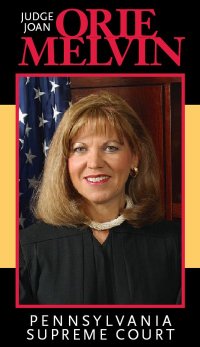
State Supreme Court Justice Joan Orie Melvin Found Guilty

BREAKING NEWS: (AP)

The jury has found suspended state Supreme Court Justice Joan Orie Melvin and her sister, Janine Orie guilty on all but one count in a campaign corruption trial.

Both were found guilty on all counts except official oppression. On that charge, the jury was hung.

The jury returned the verdict on the fourth day of deliberations.

Earlier in the day, the jury sent the judge a note which read in part, “For as close as we are, could we hear the definition of accomplice” with regard to defendant Janine Orie.

The judge read the definition and the jury resumed deliberations.

The sisters are charged with misusing Melvin’s former Superior Court staff to help her campaign for the state’s highest court in 2003 and 2009.

Janine Orie was an aide to the judge then and Allegheny County prosecutors say she helped organize that illegal campaign work — as well as other allegedly illegal work done by the state-funded staff of a third sister, then-state Sen. Jane Orie.

The sisters have denied any wrongdoing.

More:  Orie Melvin Guilty on 6 of 7 Counts (PoliticsPA)
Pa. Supreme Court Justice Joan Orie Melvin convicted of corruption (Patriot-News)

Feb 18, 2013

Congresswoman Allison Schwartz's Political Director buys website domain www.schwartzforgovernor.com


Breaking: Hat tip: PoliticsPA


It looks like Pennsylvnaia Congresswoman Allisont Schwartz's Political Director Neil Deegan has officially registered the domain www.schwartzforgovernor.com. The domain name was registered February 9th. This a pretty good indication that Congresswoman Schwartz is running for governor in next year's gubernaitoral race in Pennsylvania. Reports came out after the annual Democtratic State Committee meeting two weeks ago suggesting Schwartz was about 90% sure she was going to run.

This will set up an epic political battle in the race for governor next year between Schwartz and current incumbent republican Tom Corbett. That is if Governor Corbett can make it out of what seems to be a tough primary election race. Montgomery County Commissioner Bruce Castor is already set to challenge Corbett. Also former Revenue Secretary Tom Wolf is considering challenging Corbett.

If Schwartz runs her only possible primary competition looks like PA Treasurer Rob McCord. I doubt if the Democratic Party wants a heated primary election battle and one would have to believe Schwartz would come out on top of any party negotiations. This will give Schwartz a tremendous advantage in the general election.

Feb 17, 2013

There Are No Spending “Cuts” In Sequestration

Source: ConservativeHQ

President Barack Obama and his big spending allies, including some Republicans (such as House Armed Services Committee Chairman Buck McKeon), have launched an all-out attack on the reductions in spending set to take place March 1 through the “sequestration” agreed to in the 2011 deal to raise the debt ceiling.
As writer for U.S. News and World Report Anneke E. Green noted in a recent article, “In a speech last week, Mr. Obama talked about the ‘the economically damaging effects of the sequester' with a straight face. Nowhere in his remarks did he acknowledge that the impending spending cuts package was his idea from the start.”

What’s more, all of their gnashing of teeth and rending of clothes over sequestration’s allegedly “draconian cuts” in spending are completely phony.

The March 1 “sequestration” doesn’t actually “cut” spending -- at least as normal Americans outside the Beltway are inclined to think of “cutting” spending.

As Senator Rand Paul pointed out in his Tea Party sponsored rebuttal to Obama’s State of the Union message, “Few people understand that the sequester doesn’t even cut any spending. It just slows the rate of growth. Even with the sequester, government will grow over $7 trillion over the next decade.

Only in Washington could an increase of $7 trillion in spending over a decade be called a cut.”

The Club for Growth’s Chris Chocola took a slightly more sanguine view of sequestration, telling Steve Malzberg on Newsmax TV that, “We’ve been assured by several members of the House in leadership positions that sequestration will happen. I won’t believe it until I see it, but we think it’s a good thing… We think it starts to at least stall the road to suffocating in debt. It actually does reduce spending, it actually does reduce what they call the base lines. Future spending would be lower. All Republicans have to do is sit there and let it happen.’’

Anneke E. Greene’s article was a good reminder, generally ignored by the rest of the establishment media, that a triumphant Obama was the one to announce the deal both sides had agreed to for avoiding a default on U.S. debt in July 2011. A White House fact sheet at the time praised the deal as "a win for the economy and budget discipline."

Back in 2011, Obama termed sequester as a mere enforcement mechanism that equally hit priorities of both parties. Obama stressed that the deal didn't impact middleclass families. Social Security, Medicaid, Medicare benefits, unemployment insurance, programs for low-income families, and civilian and military retirement were exempt from cuts.

"The political calculation was that such draconian defense cuts would drive the GOP to offer concessions," notes Charles Krauthammer. "It backfired. The Republicans have offered no concessions. Obama's bluff is being called and he's the desperate party."

The good news is that, at least if Chocola’s prediction of Republican resolve proves true and sequestration holds, slowing spending is better than increasing spending. The bad news is that voters may think Congress has actually done something about the unsustainable growth of the federal budget and take the heat off their elected officials to enact real reductions in the federal government’s spending, deficit and debt.

Check out ConservativeHQ the online news source for conservatives and Tea Partiers committed to bringing small-government constitutional conservative to power.

The final word on the Paterno Report and the Sandusky Scandal

Ok here is my final word on the Paterno Family Report and Joe Paterno's role in the Sandusky Scandal. The Paterno's released the report last Sunday and the findings has caused many to revisit some of the inaccuracies and speculation that is undeniably evident in the Freeh Report released last July.

What do we now know after reading the two reports and the testimony from Sandusky's trial?

First, we now know there was no cover up to benefit the football program as suggested in the Freeh Report. Which makes the unprecedented sanctions placed upon Penn State's football program by the NCAA baseless.

Second we know that Joe Paterno followed the University's own policy when it comes to reporting incidents if sexual violence on campus. If you know anything about how allegations of sexual abuse cases are investigated we know there really was nothing more Joe Paterno could have done once he reported the incident to University officials and his supervisor.

This is contrary to the media defined narrative that they are desperately trying to hold on to. Again I have to emphasize that members of the media have no clue about how child abuse cases are investigated. Which is the main reason why their reporting has been so inaccurate and unreliable throughout this scandal.

They expect us to believe that Joe Paterno was all powerful and could of done more even if it meant breaking the laws that dictate how these kind of allegations are investigated.

Bottom line is, let's imagine that all the people involved were sitting at a table. One is the President of the Second Mile foundation a child care agency responsible for the children placed in their care, one is a state police officer, one is a campus police officer, one is a state psychologist, one is a Children and Youth caseworker, two are district attorneys, one is the President of a state university, one is as athletic director, one is a school superintendent, one is a state attorney general and one is a college football coach. All were informed of incidents regarding Sandusky and children at some point.

Out of all these people sitting at the table we are supposed to believe according to the media that the football coach is the one responsible for protecting the children that Sandusky abused.

That just sounds ridiculous.

And please stop saying that Joe Paterno should have done more when he did what the university manual informs every other staff person to do when these kinds of incidents are brought to their attention.

Also don't give me the "what if this were your child" scenario because I sure would not be blaming the football coach who doesn't have the authority to investigate or arrest criminals over all the other officials informed of the allegations.

This is what will forever be ridiculous about all of this but the most alarming thing is all the gullible people buying this garbage being pushed by members of the media. The mass and the media wants a figure head to blame. One to sell more papers or watch their stations.

For those of you who want the truth I hope I broke it down for you. If you are a member of the media who wants to keep spreading lies that hurt the football players and the students who attend Penn State then I don't have anymore time for your nonsense!

Corbett addministration extends lottery contract bid

HARRISBURG, Pa. (AP) - A top budget aide to Gov. Tom Corbett says a British firm has extended its bid to manage the $3.5 billion Pennsylvania Lottery while the administration mulls over how it will respond to the state attorney general rejecting the deal.

Executive Deputy Budget Secretary Peter Tartline said the bid from Camelot Global Services that was scheduled to expire Saturday has been extended through Friday.

According to a top aid, Governor Tom Corbett's bid to privatize the lottery is still alive.

Sources say an agreement has been reached between the state and British firm Camelot Global Services to extend the firm's bid to run the Pennsylvania Lottery. The original bid expired on Saturday after new Attorney General Kathleen Kane rejected the contract between the two, citing it unconstitutional.

The original deal between Corbett and Camelot was a 30-year contract that promised to bring in at least $3.5 Billion in revenue for the state. The governor does have the option to challenge Kane's decision in court.

Pennsylvania Attorney General Kathleen Kane has said she wouldn't approve the 20- to 30-year contract with Camelot because she says elements of it conflict with the state constitution and state lottery law.

Corbett could challenge Kane's decision in court. The contract's legality is also being challenged in court by Democratic lawmakers and the union that represents lottery employees.