Apr 17, 2020

Memo to America's leaders: Your credibility dies in darkness

Jennifer Stefano is vice president and chief innovation officer at the Commonwealth Foundation, Pennsylvania’s free-market think tank. Follow her on Twitter @JenniferStefano.


As our health care system and economy teeter under the strain from COVID-19, elected officials are making some of the most important decisions of our lifetimes. Especially at the state level, many are emerging as competent leaders. Others, though, are undermining their authority and the public trust by hiding behind a wall of secrecy.
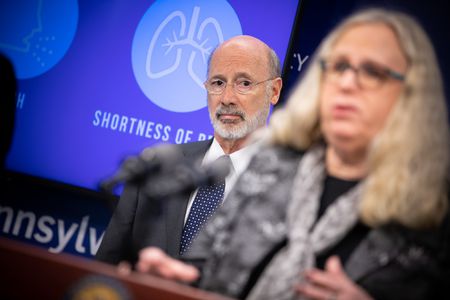
Americans have never put up with “don’t ask questions, just trust me” for long — especially in a crisis.
In Pennsylvania, for example, Gov. Tom Wolf initially was an open book in dealing with the coronavirus threat, holding daily news conferences and providing updates. But then he dropped a hammer on the state’s workers and businesses with no warning.
On March 19, Wolf issued a statewide ban on business operations not deemed “life-sustaining.” The drastic measure was unprecedented, and so was its announcement. The shutdown order was announced on a Thursday afternoon and went into effect just three hours later.
The business community wasn’t consulted. Lawmakers were blindsided. The criteria for what qualified as “life-sustaining” was ill-defined, and bans on certain industries appeared to be arbitrary. The details eventually released were a hodgepodge, seemingly assembled with little forethought, that evolved constantly over the next weeks.
Truckers could work, but interstate rest stops and Turnpike restaurants and restrooms were closed. State-run liquor stores were open, but payroll companies — which ensure life-sustaining workers can be paid — were shuttered. Then rest stops and payroll companies were reopened and liquor stores were closed. Unprecedented times may call for unprecedented measures, but the haphazard rollout of Wolf’s business shutdown was entirely Then it got worse.
Wolf imposed a waiver process for “non-life-sustaining” businesses to get clearance to reopen — a red-tape measure that no other state has replicated.
Other states under businesses shutdowns, such as in Maryland, allow for exemptions for businesses in the supply chain, or a good-faith determination, using legal counsel, in cases where a business may provide “essential” services but isn’t on the approved list. Govs. Larry Hogan of Maryland and Gavin Newsom of California have provided greater clarity and transparency while implementing their own extraordinary measures.
But in Pennsylvania, businesses must ask permission to reopen and wait in limbo for approval. By April 3, over 42,000 waiver applications had been filed and thousands had received no answer. The Wolf administration then announced a sudden halt to the waiver process, again taking business owners by surprise.

And there are stories of waivers being denied to some businesses while being granted to others. Consider also that the governor’s former business, cabinet-maker Wolf Home Products, received
a waiver. After a public outcry, the waiver was rescinded, but the damage was done. Will Pennsylvanians trust Wolf to have their best interests at heart going forward? Or will they perceive this as another case of politicized decision-making by corrupt elites?
It’s hard to fault their suspicions. 
Because the waiver process takes place behind closed doors, no one really knows who makes the decisions and what criteria is used. And the Wolf administration is refusing open records requests for details. According to investigative journalism nonprofit Spotlight PA, “The process has sowed widespread frustration, anger and confusion.” 
That’s why Pennsylvania lawmakers are trying to bring clarity to Wolf’s shadowy shutdown. This week, the General Assembly passed a bill that replaces the Wolf administration’s “essential” list and waiver process with simple and transparent guidelines from the Department of Homeland Security, allowing more elements of the economy to reopen as long as businesses adhere to strict social distancing requirements.
Though Wolf says he plans to veto this bill, he should take its lessons to heart.
Dramatic emergency orders, though understandable in a crisis, are really just new laws that all must follow or face the consequences. Except nobody votes on them and few, if any, understand them.
Wolf should take this legislative pushback as an opportunity for a course correction. If he continues to govern in darkness, he'll undermine his authority and risk that his next directives will be met with suspicion rather than acceptance.


Deflation Ahead!


Globalization has generated hyper-specialization  in local and regional economies, stripping them of resilience. Fully  exposed to the demand flows of a globalized class of consumers with  surplus discretionary income, regions specialized in tourism,  manufacturing, commodity mining, etc.
All these regions are now facing a structural collapse of global demand, and they have no  diversified local economy to cushion the blow to jobs, incomes, profits  and tax revenues.

This is the future of vast swaths of the global  economy: labor, commodities, assets, goods and services, and the tax revenues that are skimmed from the private sector, will all crash as supply far exceeds demand.

The price of a great many assets will crash, out of proportion to the decline in demand. Only the global top  10% can afford to buy pricey vacation homes, for example, and as the top  10% own 90% of the assets that are melting away like ice cubes in Death  Valley, when their ability and willingness to buy assets they can no  longer afford vanishes, the market price of those assets can fall 90% or  even to zero.

Apr 16, 2020

PA GOP Chairman Lawrence Tabas Calls on Wolf to Re-open businesses

Republican Party Chairman Lawrence Tabas issued the following statement urging Governor Wolf to sign legislation (SB 613 and SB 327) which would start to safely re-opening Pennsylvania’s economy: 

“The Pennsylvania Legislature is taking a bold lead on measures to safely re-open businesses which closed on the unilateral order of Governor Wolf.  On March 16, offering little more than a spreadsheet for guidance, Governor Wolf ordered what amounted to a statewide shutdown of businesses — including the supply chain for essential items such as personal protective equipment for health care workers. Wolf’s Executive Order ignored guidelines set by the Federal Center for Disease Control (CDC) and US Cyber and Infrastructure Security Agency (CISA) guidelines. Waivers granted by his administration came unevenly and without rhyme or reason. Hardworking Pennsylvanians have participated faithfully, and they deserve to see the light at the end of the tunnel.  Governor Wolf has an obligation and an opportunity to live up to his promise of a transparent government by signing this legislation without hesitation. 
# # # 
BACKGROUND:   
SB 613 requires Governor Wolf to create guidelines for businesses to operate during COVID-19.  It also requires that Pennsylvania base these guidelines on CDC and CISA guidance as 22 states and Washington D.C. have done.  
SB 327 allows county governments authority to develop COVID-19 mitigating strategies following CDC and CISA guidelines, including which businesses can operate.  It also creates the COVID-19 Cost and Recovery Task Force which includes all three branches of government. The Task Force will develop a plan to recover from COVID-19.  

Apr 15, 2020

PA Governor Tom Wolf’s New Task Force for Health Disparity to Address How COVID-19 Affects Minorities


Amid growing concern for how COVID-19 is disproportionately affecting minority populations in the state and adding to existing health disparity issues, today Gov. Tom Wolf and Lt. Gov. John Fetterman announced the creation of a COVID-19 Response Task Force for Health Disparity that will help communicate issues with how the pandemic is affecting the state’s minority and vulnerable populations.
“We know of instances in Pennsylvania where major COVID-19 outbreaks have occurred in vulnerable communities, including ones where people do not speak English,” Gov. Wolf said. “We’re working to improve our data collection so we can get a better statistical understanding of how the virus has affected different groups of people. The Lieutenant Governor will be chairing a new Health Disparity Task Force that will work to identify short- and long-term consequences of the COVID-19 pandemic in our vulnerable communities.”
The Task Force is comprised of members of the Wolf Administration, led by Lt. Gov. Fetterman and including the executive directors of each of the governor’s five commissions representing minority populations, members of the Department of Health’s Health Equity Response team and those that serve as the contact for stakeholders, constituents and legislators on issues and concerns surrounding health disparity in Pennsylvania’s vulnerable communities during the COVID-19 pandemic and beyond.
In addition to multiple information-gathering meetings each week, this working group will proactively reach out to leaders in these communities to collect feedback, ideas, and general comments on this issue.
The goal of the task force is to prepare recommendations to the governor that will address the short- and long-term consequences of the COVID-19 pandemic in the state’s minority and vulnerable communities.
“It’s unconscionable for Black, Hispanic, and Asian-Pacific Pennsylvanians to be hit harder by this pandemic, which has highlighted the systemwide inequity that already existed in these communities,” said Lieutenant Governor John Fetterman. “It’s our job to keep all Pennsylvanians safe, and we need to reach into these communities and create a line of communication straight to the governor, so we can stop the spread of COVID-19.”
The Department of Health releases daily data on those affected with COVID-19, but data on race has been in short supply.
“Currently we are missing that vital race information from approximately 70% of the data we are receiving from providers,” said Dr. Rachel Levine, Secretary of the Department of Health. “Yesterday we issued a reminder to hospitals and other providers that it is mandatory to report race data. We need to gather this information for a complete picture of how the virus is affecting black or African-American, Hispanic and other vulnerable communities. An increase in reporting race data means less anecdotal evidence and more facts to rely on for accurately tracking where and how we can best serve our minority populations.”
“By working proactively with leaders of different communities across our commonwealth, we can better ensure nobody gets left out as we start to recover from this crisis,” Gov. Wolf said. “We all need to continue to work together to get through this pandemic. We need to continue to care for one another. We need to continue to support each other. And we need to continue to be mindful of how our actions affect others.”

PA Small Business Owner Defies Governor Wolf’s Order. Says He Is Open For Business

I own a small business in PA (for over 8 years). When the 'recommendation' came to close all non-essential businesses, I did not close.  They said 14 days to flatten the curve on 3/16.  They ordered all non-essential businesses such as mine to close on 3/19 so I did out of fear of being arrested/fined/jailed.

Of course they extended the orders to 4/30 for stay at home and "indefinitely" for non-essential biz closures.  I didn't care.  I gave them until 3/31 like they wanted initially and so I opened back up on 4/1. Yep against 'orders'.

I have no license the state can revoke (like restaurants/bars/etc) and I can't afford to lose customers exponentially any longer, so I reached out to some of my customers to inform them that I'm back in business.

I'm still open but am not announcing it in a major way until 4/30. I have customers coming now daily!

Sure, I still lose business and have gotten a few "shame on you" emails, but I'm satisfying customers and staving off bankruptcy - no thanks to the Governor.  I applied for aid (loan) last month while closed, havent received any.  So it's up to ME to save myself the only way I know...stay open and take care of my essential livelihood.

I will not allow my civil liberties to be taken away.

Stop the bullshit posturing and empty words and stand up for yourself!  Take back your freedom - not by commenting or marching/protesting, but by opening back up and supporting other businesses who do!  I have and am walking the walk so I'm not some troll prognosticating on FB. It takes guts but fortune favors the bold!

If you want to stay in your home sheltered until the year 2025, please feel free. But what you're not going to do is shame other Americans who want to get back to work and back to normal life - and believe this country should be reopened on 4/30. No way...There is power in numbers.  Open back up on 5/1 or before! 

Apr 14, 2020

Breaking News: PA House of Representatives passes bill allowing PA businesses to reopen

10 pm:

The Pennsylvania State House JUST PASSED legislation to allow businesses to reopen as long as they are able to maintain all the social distancing guidelines put out by the Centers for Disease Control.

IF THEY ARE ABLE TO MAINTAIN THE SOCIAL DISTANCING GUIDELINES, THEY'D BE ABLE TO OPEN

Now the bill goes to the Senate where it will likely pass and then to Governor Wolf to be signed or vetoed.
Here is how the reps from NEPA voted:
(I would have supported this common sense legislation)

YES:
Karen Boback
Jonathan Fritz
Aaron Kaufer
Michael Peifer
Tina Picket
Tarah Toohil

NO:
Bridget Malloy-Kosierowski
Marty Flynn
Gerald Mullery
Mike Carroll

Governor Tom Wolf: End the restrictions, heard immunity, just sayin.....


You asked us to help you, we did. You asked us to close our business, we did. You asked us to stay home, we did. You asked us to continue to stay at home, we are. So here I am, at home, waiting. You told us don’t worry unemployment will come, it hasn’t. You told us don’t worry grants are coming, they haven’t.

You told us don’t worry forgivable loans are coming, they haven’t. You told us don’t worry stimulus money is coming, it hasn’t.

So here I am, at home waiting. I wait alongside most of my fellow small business owners, those self-employed and independent contractors. A massive number of PA residents who are waiting for the Unemployment portal to open for us, waiting for loan approvals, waiting for stimulus checks. All of these programs, we are at the back of the line for. So here we wait.

While bills come daily, savings continuously dwindling and still doing our part. It is time you do yours. It is an inconceivable expectation to close unessential business halting all income and expect us to survive.

We need to pay our bills and put food on the table. Without immediate action, you are leaving us no options. How are we to survive? We deserve an answer.

Coming soon is not acceptable any longer!

Waiver of Penalties on Accelerated Sales Tax Prepayments


Businesses that collect Pennsylvania sales tax will not have to make Accelerated Sales Tax (AST) prepayments in April, May or June, the Department of Revenue has announced. That means businesses that normally have a monthly prepayment requirement will not be charged penalties for missing the prepayment deadline during this three-month period. 

Under this new scenario, the department is asking businesses to simply remit the sales tax that they collected during the prior month. The due dates to remit sales tax will be April 20, May 20 and June 22, which follows the standard due dates for monthly filers who have no prepayment requirement.  

Visit the Department of Revenue’s page on Accelerated Sales Tax Prepayments for more information on how to calculate your prepayments.
All businesses are encouraged to remit online using e-TIDES, the department’s online tax system for businesses. Find the REV-819 on the department’s website for a schedule of return and prepayment due dates. You can also visit the department’s Online Customer Service CenterOpens In A New Window to find answers to common tax questions or submit a question to the department.

Jan 27, 2019

By the numbers: Pennsylvania ranked No. 34 in 2019 business climate index


Via PA Watchdog

Pennsylvania finished at No. 34 among the 50 states in the Washington-based Tax Foundation’s analysis of how states’ tax systems affect their ability to attract and retain businesses.

The analysis examined more than 100 variables involving the states’ primary methods of taxation: corporate taxes, individual income taxes, sales taxes, unemployment insurance taxes and property taxes. Many of the top-rated states lack one of those five major taxes, but a few apply all the taxes with low rates and broad bases.

Pennsylvania ranked No. 43 for its corporate tax; No. 18 for its individual income tax; No. 21 for its sales tax; No. 34 for its property tax; and No. 46 for its unemployment insurance tax.

The State Business Tax Climate Index, which was released in September, aims to show how state tax systems compare with each other and provide a blueprint for improvements, according to a post on the foundation’s website. The study is based on tax rules in effect for fiscal year 2018-2019.

---
Which State Tax Systems Are Poised to Generate Economic Growth?
StateCorporate Tax RankIndividual Income Tax RankSales Tax RankProperty Tax RankUnemployment Insurance Tax RankOverall Rank
Wyoming11638361
Alaska251523352
South Dakota113328393
Florida61221124
Montana1222310215
New Hampshire459144446
Oregon3036417377
Utah510163168
Nevada335408459
Indiana18151221110
Delaware504129311
North Carolina3162033712
Michigan111211224913
Missouri425257814
Texas49637371815
Tennessee24846292216
North Dakota23203261417
Colorado161438124018
West Virginia132817183019
Washington44649251920
Idaho26232644821
Virginia103510304322
Kentucky271714354723
Nebraska2826940924
New Mexico21314111025
Oklahoma9333919126
Arizona17194751327
Kansas342131201528
Massachusetts371113465029
Maine41247412430
Mississippi15273536531
Wisconsin35398214132
Georgia83829243833
Pennsylvania431821344634
South Carolina193434272735
Illinois391336454236
Rhode Island322923432937
Hawaii144724162638
Alabama203048151239
Maryland224518422840
Vermont383715492041
Ohio46442813642
Minnesota424627312543
Louisiana36325032444
Iowa484219393345
Arkansas404044263446
Connecticut294330502347
New York74842473148
California314943141749
New Jersey475045483250
Source: Tax Foundation

Property tax ‘relief’ that exacerbates inequities

Oh, where does one begin with the folly of public officials seeking to use the legislative process to addto the inequities of the property tax system?
The Post-Gazette reports that a trio of Democrat legislators representing Pittsburgh will seek to amend a 1988 law applicable to Philadelphia (put in place there in 2013 but not allowing homeowners to also claim a homestead exemption) and Pittsburgh/Allegheny County (but never put into practice here) granting them the power “to manage” their property taxes.
Perhaps the more accurate phrase would be “to manipulate.”
Lack of a statewide mandate for regular reassessments — and Allegheny County officials’ steadfast refusal to do the same for political reasons — have left the system filled with gross inequities.
Not keeping up with ever-changing valuations, some properties are underassessed. Others are over-assessed. That means the former aren’t paying their fair share while the latter are paying an unfair share.
And what Sen. Jay Costa and Reps. Ed Gainey and Sara Innamorato seek to do will only exacerbate the inequities.
To wit, they want to create a “Longtime Owner Occupant Program (LOOP) that would, as the P-G reports, “exempt certain homeowners – those who, for example, have owned property for a minimum of 10 years in a rapidly developing neighborhood – from having to pay increased property taxes or allow them to defer the taxes to the next owner.”
Or as Costa told the newspaper:
“This is an attempt to allow those folks to stay in those neighborhoods, those folks who have spent many, many years, in good times and in bad. We don’t want them to be forced out of their homes because of the positive economic development that’s been taking place.”
The City of Pittsburgh is analyzing housing data in fast-developing places such as Bloomfield, East Liberty, Friendship and Lower Lawrenceville and is “poised to begin a public process to decide which neighborhoods would qualify for protection,” the newspaper’s Ashley Murray reports.
The program would apply to city real estate taxes, not county taxes and not school taxes, the latter of which represent the lion’s share of real estate tax bills.
But the simple fact of the matter is that such a program will offload part of the tax burden onto someone else. And it’s not as if the values of these targeted homes haven’t increased and, with that, increasing the equity position of these homeowners. Why should some essentially subsidize the rise in home values of others?
If amended by the state Legislature, this measure would create a situation in which comparable properties would be taxed at different rates solely based on the occupants’ longevity in these respective homes. “Fair”? “Equitable”?
Perhaps next “The State” will guarantee a value floor for the real estate of long-time residents in rapidly declining neighborhoods?
And as with any government operation, unintended consequences loom large.
“Suppose the owner of a property bought the house in a protected neighborhood when he was 35,” says Jake Haulk, the president-emeritus of the Allegheny Institute. “He is now 45 and gets a massive tax break for 25 or 30 years. A 55 year old who bought this year would have to wait until he is 65 and still be living in the house before being eligible.”
Then, too, the Ph.D. economist who’s now a senior advisor to the think tank says, “protected properties might increase in value faster than the market says because of the low taxes and then take a big hit when the tax break goes away upon sale of the property.
“Like rent control, this will have massive unintended consequences. Other groups of property owners will demand relief of some sort,” Haulk predicts.
“The only good news is that the county and district have no incentive to participate,” he notes.
And here’s something else to ponder, per Haulk:
With no regular reassessment, the assessed value will not change unless the property is sold and a governing body appeals the value based on the sales price. The city is on record as not appealing assessments. But the buyer would get hit with the higher assessment following another successful taxing body appeal.
“So, rising property values because of stronger demand will have no impact until a county reassessment or unless the city appeals based on sales prices,” he reminds. “If regular reassessments were in place, all property owners in areas with well above average real estate price increases will get hit hard with higher taxes even with the windfall provision.
“A tax relief program for some of the hard hit will not sit well with others looking at big increases. It will reduce incentive to sell by the beneficiaries of the program, further distorting the market. This plan just has not been thought out well,” Haulk concludes.
Sans Allegheny County officials suddenly having an epiphany and ordering regular reassessments, it remains incumbent upon the General Assembly to pass legislation mandating the same.
Otherwise, this mess will only grow and, with past being prologue, the courts will be forced to step in. And the blame will fall squarely on “leaders” who failed to lead with the latest in a long line of gross panders.
Colin McNickle is communications and marketing director at the Allegheny Institute for Public Policy (cmcnickle@alleghenyinstitute.org).

Jan 26, 2019

Cycle of Dependency

By Lowman S. Henry

The headline blared from the Sunday opinion page: Where's Washington's Heart?  Rather than being an editorial on helping to lift people out of poverty it was instead - predictably - a robust and deeply flawed defense of government social welfare programs.

Decades after President Lyndon Johnson declared a "war on poverty" that turned out to be a massive expansion of government dependency programs, and after the expenditure of trillions of taxpayer dollars on those programs, the needle on poverty has barely moved.

What has changed is the number of Americans trapped on the government dole.  The Left believes this is a good thing - government is assisting more people.  And while helping people who truly need assistance is a shared goal across the political spectrum, conservatives want to take that one step further and return as many people as possible to self-sufficiency.

The term "cycle of dependency" is used by social scientists to describe how addiction to government aid gets handed down from one generation to the next.  But, there is another "cycle of dependency" that explains the Left's fixation with growing the number of people receiving public assistance.

Here is how it works: more people dependent on government creates more voters will support those candidates pledging to preserve and expand their benefits; this results in the election/re-election of Left-leaning candidates who then work to increase the number of people dependent on such programs, repeat, repeat and repeat.

Attempt to break this cycle and the Left will attack saying you lack compassion, or as the headline put it "heart."  This too is a favorite, and highly effective, tactic of the Left.  Big government advocates are exceptionally good at messaging.  They can take any government program, regardless of how ineffective or inefficient it might be, and make it sound like mom and apple pie.  For example the "Affordable Care Act" made health care less available and more expensive; illegal immigrants become "dreamers" and the murdering of babies in the womb becomes "reproductive rights."

What triggered the editorial screed, augmented by the sub-headline "When it comes to helping hunger Americans, we have lost our humanity," was a move by the Trump Administration to allow states greater flexibility in moving people off the Supplemental Nutritional Assistance Program (SNAP), commonly known as food stamps, and into self-sufficiency.

You would think helping Americans become more self-sufficient and thus not needing government assistance would be an obvious goal.  But, it would break the Left's electoral cycle of dependency so crank up the propaganda machine and declare such efforts to be heartless.

But are they heartless?

The Trump Administration's goal is to foster the movement of able-bodied adults without dependent children from dependency into the work place.  A similar effort in Pennsylvania passed the General Assembly last year, but fell victim to a veto by Governor Wolf who saw the threat to his electoral coalition.

Opposition to this policy is the opposite of heartless; it restores human dignity.  Nobody is proposing that children go unfed; or those with physical or mental disabilities are denied SNAP benefits.  The goal is for those able to work, and for whom jobs are available, to do so.

This is, as conservative author Arthur Brooks termed it, the "conservative heart":  Provide equality of opportunity through educational reforms such as expanded school choice and job training programs.  Foster a pro-growth economy that makes available good, family sustaining jobs.  This approach will break the classic cycle of dependency and move those who are able from being dependent on government to helping government through their tax dollars funding programs for those in actual need.

In fact, advocacy for the continued trapping of able-bodied, able-minded individuals on government assistance is what is truly heartless.  Doing so with an ulterior political motive is not only heartless, but downright mean. It is time we stopped falling for the Left's spin and put into place those policies that restore more people to the dignity of self-sufficiency.

(Lowman S. Henry is Chairman & CEO of the Lincoln Institute and host of the weekly Lincoln Radio Journal.  His e-mail address is lhenry@lincolninstitute.org.)

Apr 10, 2014

A Taxing Tale

Guest Column By Lowman S. Henry


President Obama's claim that "If you like your health care plan you can keep your health care plan" was dubbed by pundits as the 2013 lie of the year. Fast forward to this year's gubernatorial campaign and two lies are competing for top honors.  Take your choice between: Governor Tom Corbett has slashed spending on public education; and Marcellus Shale gas drillers, unlike other states, are not paying high enough taxes.


Pollsters for the four remaining Democratic candidates for governor seem to have all discovered that education funding has surpassed unemployment and the melting polar ice caps as the main issue concerning likely voters in the upcoming primary.  Thus a happy convergence of the two lies has occurred.  The candidates can promise voters their cake - more education spending - and they can eat it too because they will tax the robber baron gas drillers to pay for it.


Setting aside the fact more state dollars are being spent on public education than at any time in the history of the commonwealth, let's focus on whether or not companies drilling in Pennsylvania's Marcellus Shale reserve are paying their fair share.  One candidate claims on his website that we are giving ". . . away our state's valuable resources without generating revenue for critical investments like schools . . . "  His television ads point out that gas drillers in Penn's Woods do not pay a severance tax as do companies operating in every other state in the union.


That is a true, but misleading statement.  Pennsylvania does not levy a severance tax, which is a tax applied on gas as it leaves the well, but the commonwealth does charge gas companies - as it does all other businesses - both a Corporate Net Income Tax and a Capital Stock & Franchise Tax.  We are the only state in the nation that levies both of those taxes.  That alone would place Marcellus shale drillers on an equal footing with the 49 other states.


But, it doesn't stop there.  Act 13 of 2012 imposed an impact fee on natural gas wells in Penn's Woods.  It is called a fee because Republicans supporting the measure did not want to be accused of raising taxes.  A rose by any other name, however, is still a rose.  The dictionary defines the word tax as "a sum of money demanded by a government for its support, or for specific facilities or services." Thus, the Marcellus Shale impact fee is, by definition, a tax.


The impact tax is levied based upon the price of natural gas traded on the market and on the age of the wells.  Thus the amount of revenue generated each year fluctuates depending on market performance and number of wells drilled.  According to the Allegheny Institute for Public Policy in Pittsburgh, the impact tax generated $204.2 million in revenue in 2011 and $202.5 million in revenue in 2012.  Less was generated in 2012 because the market price of the gas had decreased.


So, to put this into perspective, an industry that supposedly is not paying its fair share over the past two years paid every tax every other business in the state paid plus an additional $406.2 million.  What sort of outrage would there be if, for example, we asked farmers to pay an impact tax? They use natural resources - soil and water - to produce their product.  Or, perhaps to make it fair we should enact a "success tax" - in addition to Corporate Net and Capital Stock & Franchise taxes - on any business in Pennsylvania that expands rapidly and reaps higher profits?


The current political debate focused on adding another layer of tax on Marcellus Shale drillers implies, and in some cases outright states, that the gas companies are taking a natural resources and we are left with no benefit.  But the Allegheny Institute's analysis of where dollars from the impact tax have gone shows that a wide range of state agencies, county and local governments have received revenue from the tax.  These funds have gone to repair and replace local bridges, improve water and sewer projects, clean up acid mine drainage, pay for green space initiatives and watershed projects. Money has been set aside in the Environmental Stewardship Fund to pay for any future problems which may arise, and into community and economic development.  Counties - all 67 of them - have shared in over $21 million in revenue.


As in most political campaigns truth is the first casualty.  Candidates can certainly propose higher taxes, but they should at least not mislead voters. Instead they should tell the whole story and not just those parts of it that fit their campaign narrative.


(Lowman S. Henry is Chairman & CEO of the Lincoln Institute and host of the weekly Lincoln Radio Journal. His e-mail address is lhenry@lincolninstitute.org.)