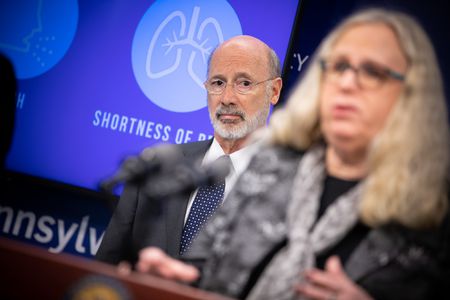
a waiver. After a public outcry, the waiver was rescinded, but the damage was done. Will Pennsylvanians trust Wolf to have their best interests at heart going forward? Or will they perceive this as another case of politicized decision-making by corrupt elites?
Apr 17, 2020
Memo to America's leaders: Your credibility dies in darkness
a waiver. After a public outcry, the waiver was rescinded, but the damage was done. Will Pennsylvanians trust Wolf to have their best interests at heart going forward? Or will they perceive this as another case of politicized decision-making by corrupt elites?
Deflation Ahead!
Globalization has generated hyper-specialization in local and regional economies, stripping them of resilience. Fully exposed to the demand flows of a globalized class of consumers with surplus discretionary income, regions specialized in tourism, manufacturing, commodity mining, etc.
All these regions are now facing a structural collapse of global demand, and they have no diversified local economy to cushion the blow to jobs, incomes, profits and tax revenues.
This is the future of vast swaths of the global economy: labor, commodities, assets, goods and services, and the tax revenues that are skimmed from the private sector, will all crash as supply far exceeds demand.
The price of a great many assets will crash, out of proportion to the decline in demand. Only the global top 10% can afford to buy pricey vacation homes, for example, and as the top 10% own 90% of the assets that are melting away like ice cubes in Death Valley, when their ability and willingness to buy assets they can no longer afford vanishes, the market price of those assets can fall 90% or even to zero.
Apr 16, 2020
PA GOP Chairman Lawrence Tabas Calls on Wolf to Re-open businesses
Apr 15, 2020
PA Governor Tom Wolf’s New Task Force for Health Disparity to Address How COVID-19 Affects Minorities
PA Small Business Owner Defies Governor Wolf’s Order. Says He Is Open For Business
Of course they extended the orders to 4/30 for stay at home and "indefinitely" for non-essential biz closures. I didn't care. I gave them until 3/31 like they wanted initially and so I opened back up on 4/1. Yep against 'orders'.
I have no license the state can revoke (like restaurants/bars/etc) and I can't afford to lose customers exponentially any longer, so I reached out to some of my customers to inform them that I'm back in business.
I'm still open but am not announcing it in a major way until 4/30. I have customers coming now daily!
Sure, I still lose business and have gotten a few "shame on you" emails, but I'm satisfying customers and staving off bankruptcy - no thanks to the Governor. I applied for aid (loan) last month while closed, havent received any. So it's up to ME to save myself the only way I know...stay open and take care of my essential livelihood.
I will not allow my civil liberties to be taken away.
Stop the bullshit posturing and empty words and stand up for yourself! Take back your freedom - not by commenting or marching/protesting, but by opening back up and supporting other businesses who do! I have and am walking the walk so I'm not some troll prognosticating on FB. It takes guts but fortune favors the bold!
If you want to stay in your home sheltered until the year 2025, please feel free. But what you're not going to do is shame other Americans who want to get back to work and back to normal life - and believe this country should be reopened on 4/30. No way...There is power in numbers. Open back up on 5/1 or before!
Apr 14, 2020
Breaking News: PA House of Representatives passes bill allowing PA businesses to reopen
The Pennsylvania State House JUST PASSED legislation to allow businesses to reopen as long as they are able to maintain all the social distancing guidelines put out by the Centers for Disease Control.
IF THEY ARE ABLE TO MAINTAIN THE SOCIAL DISTANCING GUIDELINES, THEY'D BE ABLE TO OPEN
Now the bill goes to the Senate where it will likely pass and then to Governor Wolf to be signed or vetoed.
Here is how the reps from NEPA voted:
(I would have supported this common sense legislation)
YES:
Karen Boback
Jonathan Fritz
Aaron Kaufer
Michael Peifer
Tina Picket
Tarah Toohil
NO:
Bridget Malloy-Kosierowski
Marty Flynn
Gerald Mullery
Mike Carroll
Governor Tom Wolf: End the restrictions, heard immunity, just sayin.....
You asked us to help you, we did. You asked us to close our business, we did. You asked us to stay home, we did. You asked us to continue to stay at home, we are. So here I am, at home, waiting. You told us don’t worry unemployment will come, it hasn’t. You told us don’t worry grants are coming, they haven’t.
You told us don’t worry forgivable loans are coming, they haven’t. You told us don’t worry stimulus money is coming, it hasn’t.
So here I am, at home waiting. I wait alongside most of my fellow small business owners, those self-employed and independent contractors. A massive number of PA residents who are waiting for the Unemployment portal to open for us, waiting for loan approvals, waiting for stimulus checks. All of these programs, we are at the back of the line for. So here we wait.
While bills come daily, savings continuously dwindling and still doing our part. It is time you do yours. It is an inconceivable expectation to close unessential business halting all income and expect us to survive.
We need to pay our bills and put food on the table. Without immediate action, you are leaving us no options. How are we to survive? We deserve an answer.
Coming soon is not acceptable any longer!
Waiver of Penalties on Accelerated Sales Tax Prepayments

Under this new scenario, the department is asking businesses to simply remit the sales tax that they collected during the prior month. The due dates to remit sales tax will be April 20, May 20 and June 22, which follows the standard due dates for monthly filers who have no prepayment requirement.
Jan 27, 2019
By the numbers: Pennsylvania ranked No. 34 in 2019 business climate index
Via PA Watchdog
Pennsylvania finished at No. 34 among the 50 states in the Washington-based Tax Foundation’s analysis of how states’ tax systems affect their ability to attract and retain businesses.
The analysis examined more than 100 variables involving the states’ primary methods of taxation: corporate taxes, individual income taxes, sales taxes, unemployment insurance taxes and property taxes. Many of the top-rated states lack one of those five major taxes, but a few apply all the taxes with low rates and broad bases.
Pennsylvania ranked No. 43 for its corporate tax; No. 18 for its individual income tax; No. 21 for its sales tax; No. 34 for its property tax; and No. 46 for its unemployment insurance tax.
The State Business Tax Climate Index, which was released in September, aims to show how state tax systems compare with each other and provide a blueprint for improvements, according to a post on the foundation’s website. The study is based on tax rules in effect for fiscal year 2018-2019.
| State | Corporate Tax Rank | Individual Income Tax Rank | Sales Tax Rank | Property Tax Rank | Unemployment Insurance Tax Rank | Overall Rank |
| Wyoming | 1 | 1 | 6 | 38 | 36 | 1 |
| Alaska | 25 | 1 | 5 | 23 | 35 | 2 |
| South Dakota | 1 | 1 | 33 | 28 | 39 | 3 |
| Florida | 6 | 1 | 22 | 11 | 2 | 4 |
| Montana | 12 | 22 | 3 | 10 | 21 | 5 |
| New Hampshire | 45 | 9 | 1 | 44 | 44 | 6 |
| Oregon | 30 | 36 | 4 | 17 | 37 | 7 |
| Utah | 5 | 10 | 16 | 3 | 16 | 8 |
| Nevada | 33 | 5 | 40 | 8 | 45 | 9 |
| Indiana | 18 | 15 | 12 | 2 | 11 | 10 |
| Delaware | 50 | 41 | 2 | 9 | 3 | 11 |
| North Carolina | 3 | 16 | 20 | 33 | 7 | 12 |
| Michigan | 11 | 12 | 11 | 22 | 49 | 13 |
| Missouri | 4 | 25 | 25 | 7 | 8 | 14 |
| Texas | 49 | 6 | 37 | 37 | 18 | 15 |
| Tennessee | 24 | 8 | 46 | 29 | 22 | 16 |
| North Dakota | 23 | 20 | 32 | 6 | 14 | 17 |
| Colorado | 16 | 14 | 38 | 12 | 40 | 18 |
| West Virginia | 13 | 28 | 17 | 18 | 30 | 19 |
| Washington | 44 | 6 | 49 | 25 | 19 | 20 |
| Idaho | 26 | 23 | 26 | 4 | 48 | 21 |
| Virginia | 10 | 35 | 10 | 30 | 43 | 22 |
| Kentucky | 27 | 17 | 14 | 35 | 47 | 23 |
| Nebraska | 28 | 26 | 9 | 40 | 9 | 24 |
| New Mexico | 21 | 31 | 41 | 1 | 10 | 25 |
| Oklahoma | 9 | 33 | 39 | 19 | 1 | 26 |
| Arizona | 17 | 19 | 47 | 5 | 13 | 27 |
| Kansas | 34 | 21 | 31 | 20 | 15 | 28 |
| Massachusetts | 37 | 11 | 13 | 46 | 50 | 29 |
| Maine | 41 | 24 | 7 | 41 | 24 | 30 |
| Mississippi | 15 | 27 | 35 | 36 | 5 | 31 |
| Wisconsin | 35 | 39 | 8 | 21 | 41 | 32 |
| Georgia | 8 | 38 | 29 | 24 | 38 | 33 |
| Pennsylvania | 43 | 18 | 21 | 34 | 46 | 34 |
| South Carolina | 19 | 34 | 34 | 27 | 27 | 35 |
| Illinois | 39 | 13 | 36 | 45 | 42 | 36 |
| Rhode Island | 32 | 29 | 23 | 43 | 29 | 37 |
| Hawaii | 14 | 47 | 24 | 16 | 26 | 38 |
| Alabama | 20 | 30 | 48 | 15 | 12 | 39 |
| Maryland | 22 | 45 | 18 | 42 | 28 | 40 |
| Vermont | 38 | 37 | 15 | 49 | 20 | 41 |
| Ohio | 46 | 44 | 28 | 13 | 6 | 42 |
| Minnesota | 42 | 46 | 27 | 31 | 25 | 43 |
| Louisiana | 36 | 32 | 50 | 32 | 4 | 44 |
| Iowa | 48 | 42 | 19 | 39 | 33 | 45 |
| Arkansas | 40 | 40 | 44 | 26 | 34 | 46 |
| Connecticut | 29 | 43 | 30 | 50 | 23 | 47 |
| New York | 7 | 48 | 42 | 47 | 31 | 48 |
| California | 31 | 49 | 43 | 14 | 17 | 49 |
| New Jersey | 47 | 50 | 45 | 48 | 32 | 50 |
Property tax ‘relief’ that exacerbates inequities
Jan 26, 2019
Cycle of Dependency
The headline blared from the Sunday opinion page: Where's Washington's Heart? Rather than being an editorial on helping to lift people out of poverty it was instead - predictably - a robust and deeply flawed defense of government social welfare programs.
Decades after President Lyndon Johnson declared a "war on poverty" that turned out to be a massive expansion of government dependency programs, and after the expenditure of trillions of taxpayer dollars on those programs, the needle on poverty has barely moved.
What has changed is the number of Americans trapped on the government dole. The Left believes this is a good thing - government is assisting more people. And while helping people who truly need assistance is a shared goal across the political spectrum, conservatives want to take that one step further and return as many people as possible to self-sufficiency.
The term "cycle of dependency" is used by social scientists to describe how addiction to government aid gets handed down from one generation to the next. But, there is another "cycle of dependency" that explains the Left's fixation with growing the number of people receiving public assistance.
Here is how it works: more people dependent on government creates more voters will support those candidates pledging to preserve and expand their benefits; this results in the election/re-election of Left-leaning candidates who then work to increase the number of people dependent on such programs, repeat, repeat and repeat.
Attempt to break this cycle and the Left will attack saying you lack compassion, or as the headline put it "heart." This too is a favorite, and highly effective, tactic of the Left. Big government advocates are exceptionally good at messaging. They can take any government program, regardless of how ineffective or inefficient it might be, and make it sound like mom and apple pie. For example the "Affordable Care Act" made health care less available and more expensive; illegal immigrants become "dreamers" and the murdering of babies in the womb becomes "reproductive rights."
What triggered the editorial screed, augmented by the sub-headline "When it comes to helping hunger Americans, we have lost our humanity," was a move by the Trump Administration to allow states greater flexibility in moving people off the Supplemental Nutritional Assistance Program (SNAP), commonly known as food stamps, and into self-sufficiency.
You would think helping Americans become more self-sufficient and thus not needing government assistance would be an obvious goal. But, it would break the Left's electoral cycle of dependency so crank up the propaganda machine and declare such efforts to be heartless.
But are they heartless?
The Trump Administration's goal is to foster the movement of able-bodied adults without dependent children from dependency into the work place. A similar effort in Pennsylvania passed the General Assembly last year, but fell victim to a veto by Governor Wolf who saw the threat to his electoral coalition.
Opposition to this policy is the opposite of heartless; it restores human dignity. Nobody is proposing that children go unfed; or those with physical or mental disabilities are denied SNAP benefits. The goal is for those able to work, and for whom jobs are available, to do so.
This is, as conservative author Arthur Brooks termed it, the "conservative heart": Provide equality of opportunity through educational reforms such as expanded school choice and job training programs. Foster a pro-growth economy that makes available good, family sustaining jobs. This approach will break the classic cycle of dependency and move those who are able from being dependent on government to helping government through their tax dollars funding programs for those in actual need.
In fact, advocacy for the continued trapping of able-bodied, able-minded individuals on government assistance is what is truly heartless. Doing so with an ulterior political motive is not only heartless, but downright mean. It is time we stopped falling for the Left's spin and put into place those policies that restore more people to the dignity of self-sufficiency.
(Lowman S. Henry is Chairman & CEO of the Lincoln Institute and host of the weekly Lincoln Radio Journal. His e-mail address is lhenry@lincolninstitute.org.)
Apr 10, 2014
A Taxing Tale
Guest Column By Lowman S. Henry
President Obama's claim that "If you like your health care plan you can keep your health care plan" was dubbed by pundits as the 2013 lie of the year. Fast forward to this year's gubernatorial campaign and two lies are competing for top honors. Take your choice between: Governor Tom Corbett has slashed spending on public education; and Marcellus Shale gas drillers, unlike other states, are not paying high enough taxes.
Pollsters for the four remaining Democratic candidates for governor seem to have all discovered that education funding has surpassed unemployment and the melting polar ice caps as the main issue concerning likely voters in the upcoming primary. Thus a happy convergence of the two lies has occurred. The candidates can promise voters their cake - more education spending - and they can eat it too because they will tax the robber baron gas drillers to pay for it.
Setting aside the fact more state dollars are being spent on public education than at any time in the history of the commonwealth, let's focus on whether or not companies drilling in Pennsylvania's Marcellus Shale reserve are paying their fair share. One candidate claims on his website that we are giving ". . . away our state's valuable resources without generating revenue for critical investments like schools . . . " His television ads point out that gas drillers in Penn's Woods do not pay a severance tax as do companies operating in every other state in the union.
That is a true, but misleading statement. Pennsylvania does not levy a severance tax, which is a tax applied on gas as it leaves the well, but the commonwealth does charge gas companies - as it does all other businesses - both a Corporate Net Income Tax and a Capital Stock & Franchise Tax. We are the only state in the nation that levies both of those taxes. That alone would place Marcellus shale drillers on an equal footing with the 49 other states.
But, it doesn't stop there. Act 13 of 2012 imposed an impact fee on natural gas wells in Penn's Woods. It is called a fee because Republicans supporting the measure did not want to be accused of raising taxes. A rose by any other name, however, is still a rose. The dictionary defines the word tax as "a sum of money demanded by a government for its support, or for specific facilities or services." Thus, the Marcellus Shale impact fee is, by definition, a tax.
The impact tax is levied based upon the price of natural gas traded on the market and on the age of the wells. Thus the amount of revenue generated each year fluctuates depending on market performance and number of wells drilled. According to the Allegheny Institute for Public Policy in Pittsburgh, the impact tax generated $204.2 million in revenue in 2011 and $202.5 million in revenue in 2012. Less was generated in 2012 because the market price of the gas had decreased.
So, to put this into perspective, an industry that supposedly is not paying its fair share over the past two years paid every tax every other business in the state paid plus an additional $406.2 million. What sort of outrage would there be if, for example, we asked farmers to pay an impact tax? They use natural resources - soil and water - to produce their product. Or, perhaps to make it fair we should enact a "success tax" - in addition to Corporate Net and Capital Stock & Franchise taxes - on any business in Pennsylvania that expands rapidly and reaps higher profits?
The current political debate focused on adding another layer of tax on Marcellus Shale drillers implies, and in some cases outright states, that the gas companies are taking a natural resources and we are left with no benefit. But the Allegheny Institute's analysis of where dollars from the impact tax have gone shows that a wide range of state agencies, county and local governments have received revenue from the tax. These funds have gone to repair and replace local bridges, improve water and sewer projects, clean up acid mine drainage, pay for green space initiatives and watershed projects. Money has been set aside in the Environmental Stewardship Fund to pay for any future problems which may arise, and into community and economic development. Counties - all 67 of them - have shared in over $21 million in revenue.
As in most political campaigns truth is the first casualty. Candidates can certainly propose higher taxes, but they should at least not mislead voters. Instead they should tell the whole story and not just those parts of it that fit their campaign narrative.
(Lowman S. Henry is Chairman & CEO of the Lincoln Institute and host of the weekly Lincoln Radio Journal. His e-mail address is lhenry@lincolninstitute.org.)